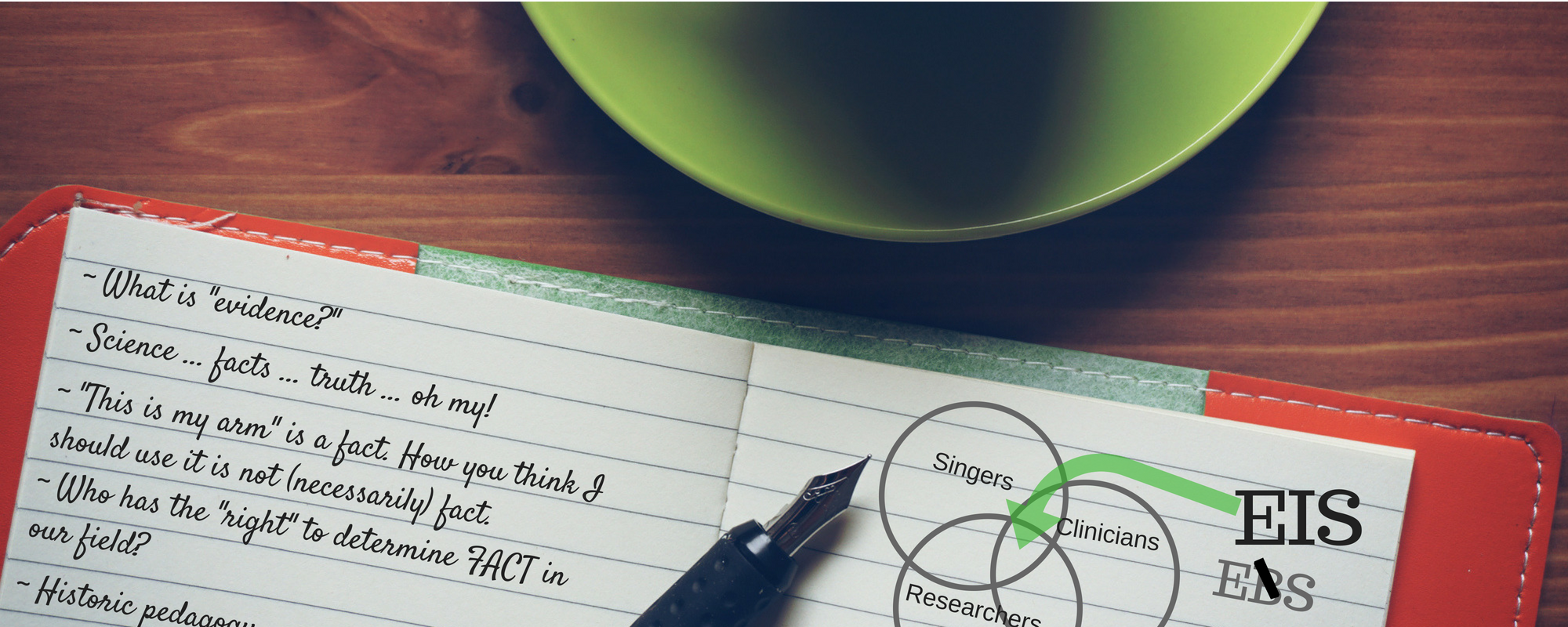
You know that warning that got a laugh in Jurassic Park… where the person looks in the side mirror at the dinosaur chasing them behind the vehicle? Objects in mirror are closer than they appear. For some reason this scene jumped into my brain as I  contemplated an article dealing with student evaluations of teaching (SET). This has always been a sore spot with me. This is where I tell you WHY and then link it to my blog’s title, Evidence-Informed Singing.
SETs SUCK!
Ok this is perhaps a bit sophomoric, as my beloved choir director would have said, but it’s memorable, right? I have always stressed over student evaluations. Can you relate? No? Well if not, let me tell you that I do feel like I was raised to be a people pleaser. The path of least resistance for me, at least based on my own experience, was to just do what I was told to do as soon as I could so that I wouldn’t get into trouble. I doubt my parents found me to be this compliant, but that’s what I recall… my memories are my evidence, and they (rightfully so) inform my experience to this day. I am working on being true to myself and not worrying so much what others think or how they will react, but old habits are hard to kill.
Furthermore, I give lots of shits about what I do. Too many shits. I wish I could stop. It would be so much easier to just glide through my day and not take on everyone’s energy, responses, actions, inactions, etc. But that’s not me. If a student comes through my door in distress, well, even though I’m not a counselor, I am a mentor, and therefore I will do that job before we can even contemplate trying to make beautiful noises with the throatal region. Pent up emotions lead to tight and tense singing. You got release that shit before you can sing! And if I get attitude from a student or a colleague… yeah, I’m not going to function optimally, so I tend to bounce things off on a trusted friend or colleague so that I can be effective as a teacher, mentor, and team member. I don’t like to empty my lumpy laundry bag onto my students.
Where am I going with this?
Right… we’re about 400 words into this puppy, and you’re wondering… WTF! What does this have to do with anything. Alright here we go.
In my armchair research on student evaluations, I’ve learned that student evaluations are not effective measures of teaching. If anything, they’re good at measuring student perception. Students’ perceptions are important to me, and I do take them into consideration when I can. But…
I believe I sometimes fare poorly with student evaluations in the classroom because…
- I look younger than I am
- I’m a (fairly) attractive female
- I am female
- I have children
- Societal expectations that I’ll be nurturing (see points 3 & 4)
- I’m disorganized (yes, this is a common complaint and one that I’m constantly working on)
- I like to have fun and joke around, but that doesn’t mean my class is gonna be EASY
- I hold my students to a higher standard than they do
- I’m not going to “make” a class easy for them just to get good ratings (evidently my senior-level courses are harder than others in our major… whaaaaat?)
- I expect them to manage their deadlines and meet clear expectations
- I don’t generally accept late work (see point 6) – I have my reasons
- I require these “digital natives” to use on-line resources and course management tools
- Etc.
I like lists.
Let me give you some new info on SETs. According to this article from the American Association of University Professors (AAUP), are not valid measures. The author give a number of reasons for this. Compelling findings from a 2017 study determined that student evaluations are “…more sensitive to students’ gender bias and grade expectations than they are to teaching effectiveness.” Well that just stinks.
I’m more than willing to continue to improve as a classroom teaching. I love classroom teaching – really I do. I want to meet my students’ needs, help them develop passion for the topics at hand, and ensure that my students leave the classroom much more prepared than when they entered each session, week, semester, year. It’s a tall order, but I do love it. I don’t love knowing that my gender has something to do with my student evaluations. I don’t love knowing that if a student is earning a poor grade in my course, that I subsequently am more likely to “earn” a poor evaluation from that student.
I will say that I’ve had students who have really appreciated the rigor and my dedication to them and the subject being taught. I’ve even had students come back an apologize for bad behavior or bad attitudes. I’ve received lovely notes and emails over the year as students out in the field reflect on their education. Those are the best.
So this evidence goes into a professor’s dossier, which can be (or not) important as s/he goes up for promotion, tenure, merit awards, teaching awards, and the like. If this information is taken to be evidence of good teaching or effective teaching, then that’s a problem. It’s data-driven (to a certain extent) and quantitative (everyone’s fave), but guess what… it’s FLAWED. Gasp. Shudder. Quantitative… data… that we’ve been systematically collective for years n years… flawed!?!
Further, it seems as though we hand out those semester-end evaluations just to pacify students. I don’t know that my evaluations as a student had any effect on anything, and I’m always trying to remind my students who want to really ‘save it up’ for a mean, shitty professor at the end, that most tenure/promo decisions aren’t gravely affected by poor evaluations. Dr. Shithead will not likely get pulled into a meeting with an administrator just because you blasted her in your evaluations. Plus, they’re often transcribed incorrectly (yeah, many of us are still relying on accurate transcriptions done by office staff who have millions of other things to do and may have poor, umm…, processing skills). Many institutions have started peer evaluations… but I’m not sure those are any better. It’s hard to be critical of colleagues when they’re doing the best that they can, plus we all turn up the juice when we have an observer in the room, so how accurate is the peer eval anyway? I’d like to think that I’m just as good when no one’s looking over my shoulder, and so again, I’ll give my colleagues the benefit of the doubt.
Can we please develop better measures of student learning and for recognizing excellence in teaching?? Student evals in the age of Rate My Professor, Angie’s List, and the like really only capture the extremes… the outliers… and so how valid can they actually be?
Thank you for reading this evidence-informed rant.
 Evidence Informed singing